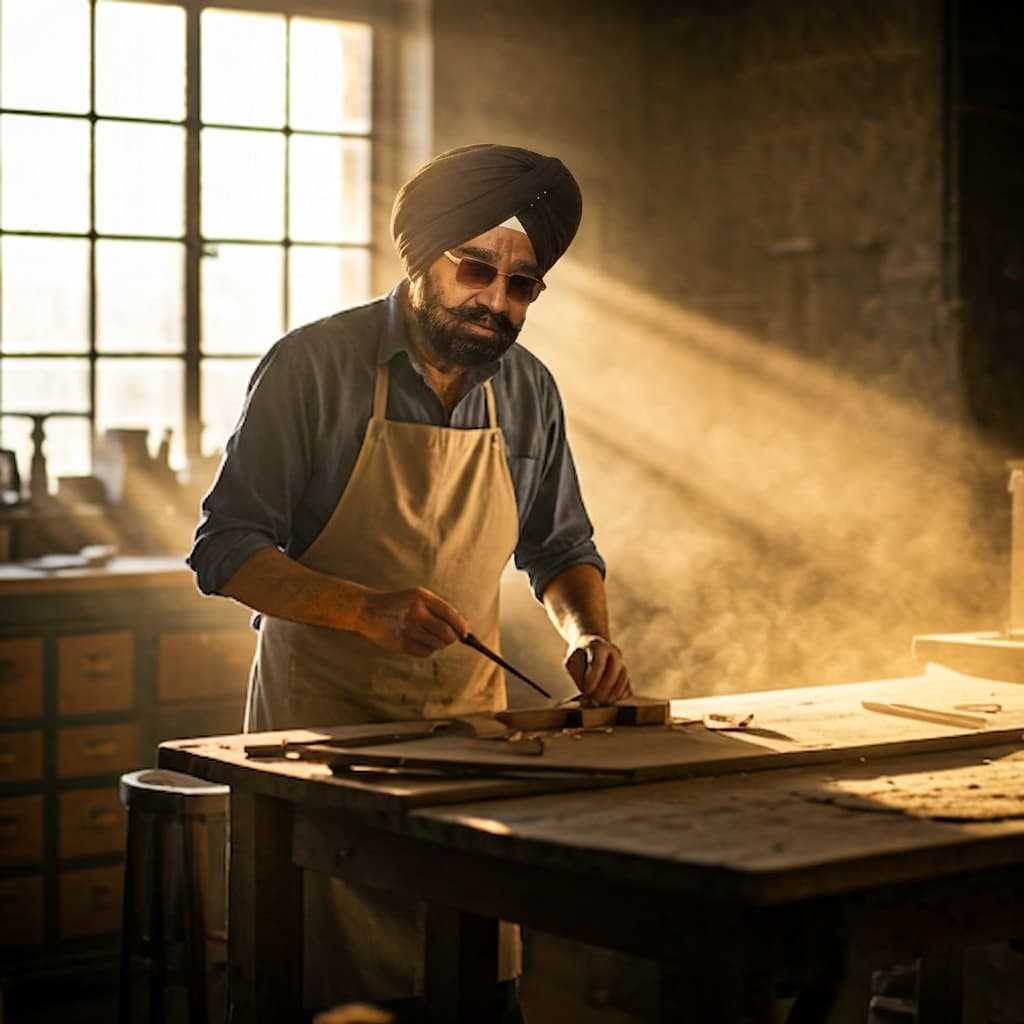
Surjeet Singh Nagi · Master woodworker
A life spent finding a new passion, and mastering it completely.
Surjeet Singh Nagi has never done anything halfway. From his earliest years, he was drawn to making things with his hands — and whatever craft he turned toward, he did not rest until he understood it from the inside out.
He began with textiles. Not just sketching patterns, but learning the entire process end to end — designing motifs, selecting dyes, printing, and finishing. He ran it all himself, developing the eye of a designer and the discipline of a craftsman in the same discipline.
Then came painting. Oils, watercolours, portraits and landscapes — studied seriously, not casually. The canvas trained him to see light, proportion, and composition; skills that would quietly carry forward into everything that followed.
After painting, calligraphy. The pen demanded a different kind of control — patience, steadiness, the ability to let pressure and angle do the work rather than force. He practised it with the same commitment he brought to every art before it, and every art after.
Woodworking arrived last — and perhaps most completely. After retirement, a small room became a workshop. Offcuts became experiments. And piece by piece, he taught himself the things that can't be rushed: how a joint should feel before it's glued, how a finish should be built in patient layers, how to let the grain decide the form.
“Each art he chose, he pursued until it was no longer a hobby — it was a standard. Textiles, painting, calligraphy, wood. The medium changed. The commitment never did.”
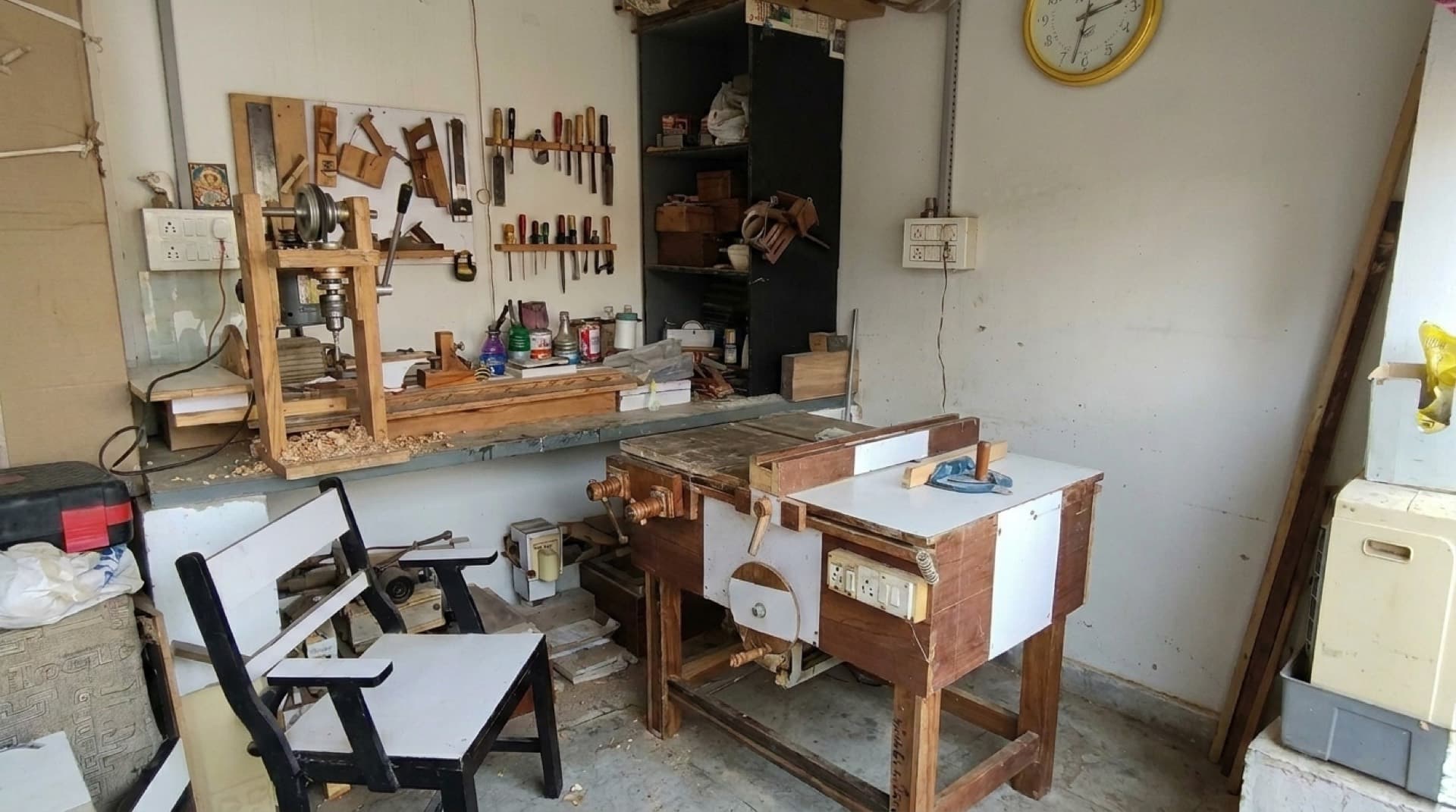
His self-made machines
When the right tool didn't exist — or cost more than it should — he built his own. Jigs, lathes, and clever contraptions of his own design fill the workshop. Each one is a small invention in service of a larger one: the piece it helps create.
He doesn't make many pieces, and that's the point. Every object that leaves the workshop carries the accumulated weight of a life spent in art — the designer's eye, the painter's sense of light, the calligrapher's patience, and the woodworker's respect for material.
These are not pieces made quickly. They are built to outlast their maker — to be passed down, repaired, loved, and used for generations.
The journey
Textile years
Designing from the ground up
Surjeet Singh Nagi began his creative life in textiles — not just designing patterns but mastering the entire process, from hand-drawn motifs to print, dye, and finishing. He learnt it end to end.
Canvas & colour
Painting
Alongside textiles, he painted. Oils, watercolours, portraits, landscapes — each one studied seriously, not casually. The discipline of painting sharpened his eye for proportion, light, and composition.
The written line
Calligraphy
Then came calligraphy. The control required — the patience, the relationship between pressure and outcome — trained the same hand that would later learn to read wood grain and cut a perfect dovetail.
Retirement
The workshop
Wood arrived last — and perhaps most completely. A small room became a workshop, offcuts became experiments, and a lifetime of disciplined creativity finally found its deepest form.
Today
A legacy taking shape
Self-built machines, one-of-a-kind pieces, and a story no factory could ever replicate.